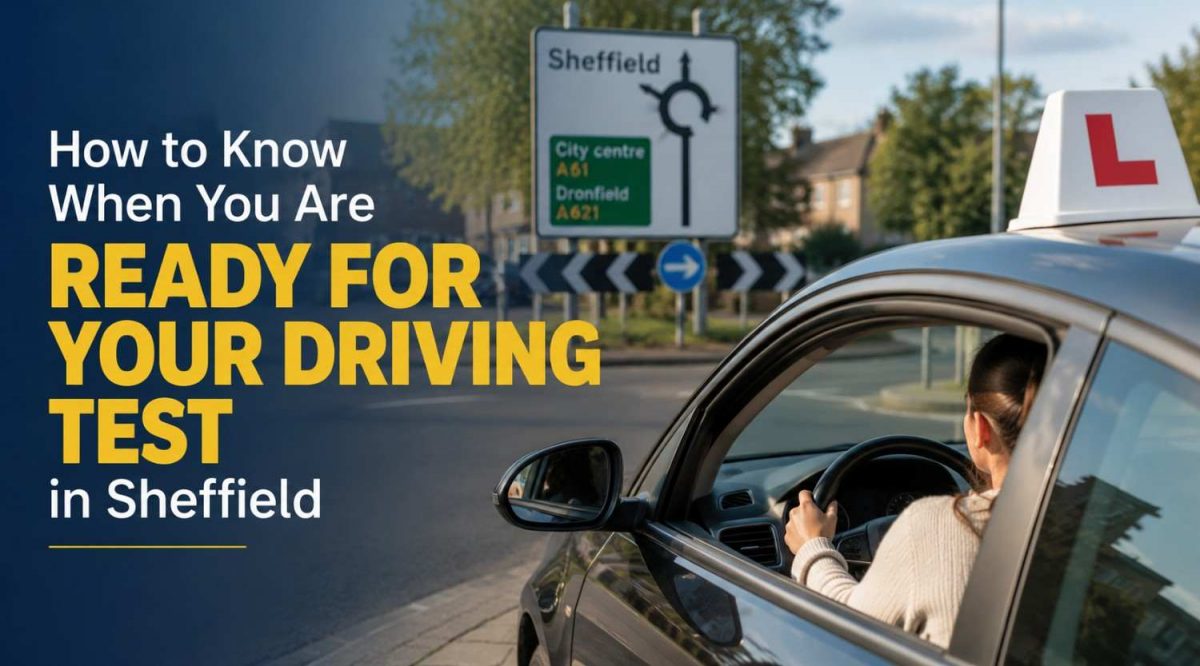
Summary: Wondering if you’re test-ready? The signs go beyond lesson count: automatic control handling, calm roundabouts, a quieter instructor, and solid mock tests. Read on to check where you actually stand before booking your driving test in Sheffield, and what’s still worth polishing first.
————————————————————
You’ve been at this driving lark a while now. Months, maybe more if we’re honest. And then one day your instructor casually drops the ‘T’ word, booking the test, and your stomach does that annoying little flip. You know the one. Sound about right?
Here’s the tricky bit, though: there’s no flashing sign that lights up saying “ready.” No app that pings you. It’s more of a feeling, backed up by a few solid signs. Let’s go through them properly.
Ready or Not: How to Tell If You Should Book Your Driving Test
You’re Not Thinking About the Controls Anymore
In the early days, everything’s conscious effort: mirrors, clutch, indicators, all fighting for space in your head at once. That’s normal. But somewhere around test-ready, the controls stop being a separate task. Your hands and feet just… know.
- Gear changes happen without a mental countdown.
- Mirror checks are automatic, not something you remind yourself to do.
- You’re not gripping the wheel as if it owes you money.
If you’re still white-knuckling it every lesson, that’s not a failure; it just means you’re not quite there yet. And that’s fine.
Junctions and Roundabouts Don’t Rattle You
Sheffield’s not exactly short of tricky junctions and roundabouts, particularly around the busier stretches near the centre. If you can approach one, judge the gap, and go, without your instructor needing to talk you through it, that’s a genuinely good sign, and exactly what a good driving school in Sheffield should be preparing you for. Ask yourself honestly:
- Do I hesitate at every roundabout, even simple ones?
- Am I still relying on my instructor’s prompts for lane positioning?
- Could I explain out loud why I’m choosing a particular gap?
If most of your answers lean towards “not really a problem anymore,” you’re closer than you think.
Your Instructor Has Started Saying Less
This one’s a quiet giveaway. Early on, instructors talk constantly, because they have to. As you improve, that chatter naturally drops off. If your lessons have gone from a running commentary to mostly comfortable silence (with the odd nudge here and there), that’s not them getting lazy. That’s them trusting you.
Mock Tests Are Going Well, Not Perfectly
Nobody drives a flawless mock test. That’s not really the bar. What matters is whether your mistakes are minor and occasional rather than the same fault repeating every single time. A mock driving test run under proper test conditions is honestly one of the best ways to find out where you actually stand, rather than guessing. Things worth checking off before booking:
- Independent driving sections feel manageable, not panic-inducing.
- You can talk and drive at the same time without losing focus.
- Show me, tell me questions don’t catch you off guard.
You Can Handle an Off Day
Test day nerves are real, even for confident learners. But being “ready” doesn’t mean being immune to nerves; it means you can still drive safely even when you’re a bit rattled. If a wrong turn or a stall doesn’t completely throw you off course anymore, that’s maturity behind the wheel, not just skill.
When in Doubt, Ask the Person Who’s Been Watching
Your instructor’s seen dozens, maybe hundreds, of learners reach this exact point. They’re usually a far better judge of readiness than you are of yourself, mostly because nerves make everyone a harsh self-critic. If you’re weighing up whether to book, that conversation is worth having honestly and early.
Whether you’re working through a semi-intensive course or fitting in flexible weekly lessons around work, the signs of readiness look much the same. Fewer nerves, fewer reminders needed, more quiet confidence behind the wheel.
There’s no perfect moment where every box ticks itself. Most learners feel a bit unsure right up until test day, and that’s completely normal. But if the driving itself has started to feel less like a task and more like something you’re just doing, that’s usually the sign worth trusting.
Not sure where you stand? That’s exactly what a proper mock test is for. Get in touch with our team, and we’ll help you figure out whether you’re ready or what’s still worth polishing before you book.
Popular Posts
Driving Instructor for Beginners: Everything You Need to Know
August 26, 2026
Driving Lessons for Beginners: A Comprehensive Guide
August 24, 2026


How Many Hours Do You Need for an Intensive Driving Course?
August 20, 2026
Post A Comment