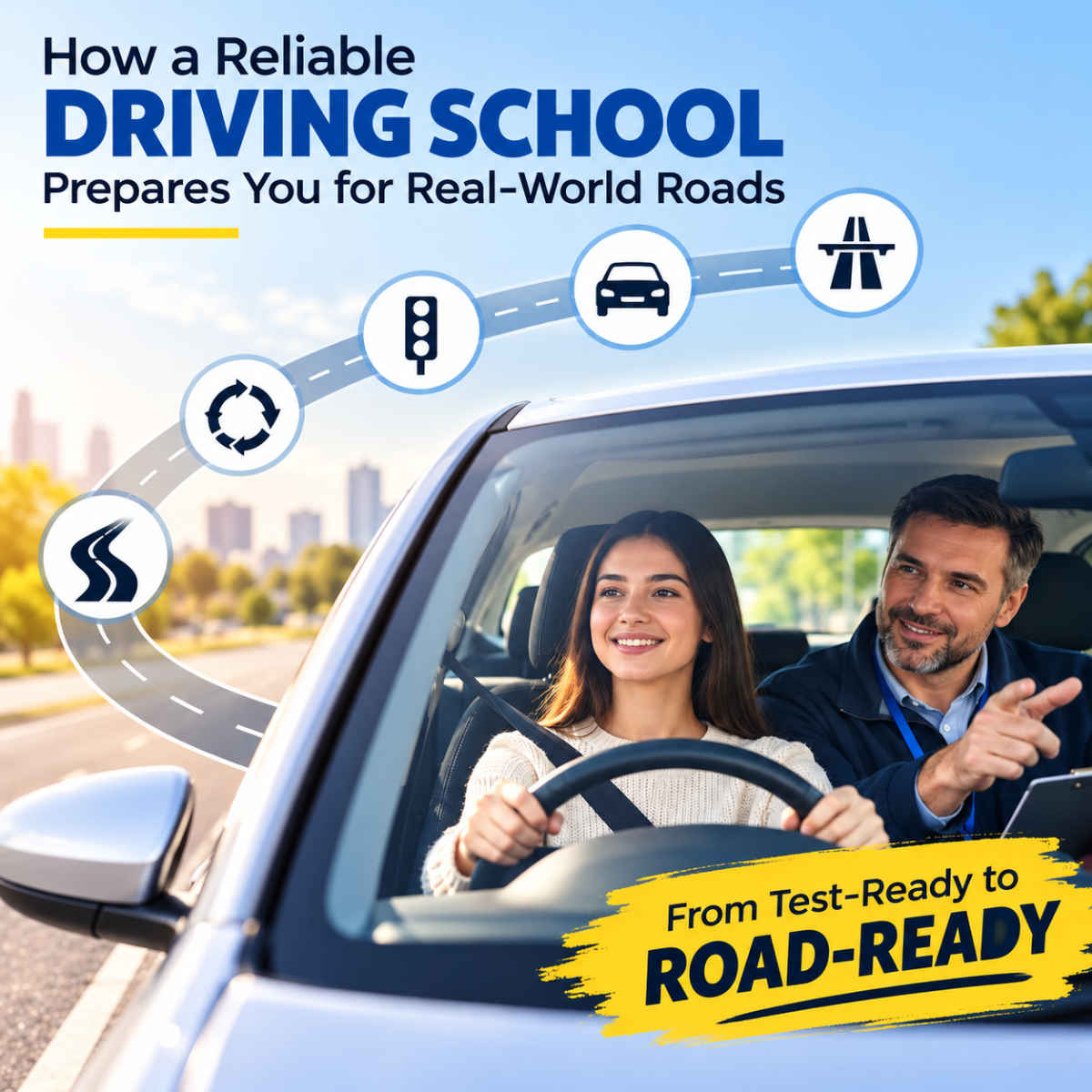
Summary: A driving school prepares learners for more than passing the driving test. Through practical training, local road experience, decision-making, hazard awareness, and gradual independence, you can build confidence for everyday driving. DVSA-approved driving instructors help to turn mistakes into learning opportunities, teach planning, calmness, and adaptability to help you become genuinely road-ready.
Get Our ServiceCALL: +44 741 3740846
Learning to drive is much more than knowing how to operate a car or passing a driving test. After having your driving licence, you are responsible for making independent decisions on unfamiliar routes, busy roads, junctions, roundabouts, and changing traffic conditions. With structured tuition, flexible learning options, and modern dual-control vehicles, you can gradually build your ability and confidence in real driving situations.
This is why a reliable driving school makes a meaningful difference to how prepared you feel after passing your test. In this blog, we will explore the ways a school with professional driving instructors prepares you for real-world situations.
Why Enrolling in a Driving School Is More Than Passing the Test
Passing a driving test is an important milestone in your life. But keep in mind that this is not the end of your learning journey. A professional driving school helps you develop habits that can continue to support you once you begin driving independently. Expert lessons cover critical areas such as vehicle control, observation, road positioning, hazard awareness, manoeuvres and independent decision-making.
You can learn how to apply these skills in daily situations, instead of simply practising them to complete an examination. Well-structured professional driving courses can provide your learning journey with a clear direction. As your skills develop, the lessons can progress from basic vehicle control to handling more demanding roads and traffic environments.
Why Local Road Experience Matters for New Drivers
Builds Familiarity with Common Routes
Driving on familiar routes can help you understand how different crossings, roundabouts, junctions and traffic patterns work. When you become more comfortable with one environment, our expert driving instructors can introduce more challenging routes. It is not about memorising a particular route; it is about developing the ability to read road signs, anticipate changes and respond appropriately when the road does not behave exactly as expected.
Improves Confidence in Busy Areas
When you are still learning, busy roads can feel overwhelming. Traffic lights, pedestrians, cyclists, parked vehicles and multiple lanes can require you to process several things at once. You can become more comfortable in these environments with the help of a gradual instructor. This is one of the practical reasons to take driving lessons from DVSA-approved instructors. They provide guidance when necessary and allow you to take increasing responsibility for your decisions.
Develops Better Hazard Awareness
Hazard awareness is an essential part of everyday driving. You need to look beyond the vehicle immediately in front of you and consider what could happen next. Regular practical experience can teach you to identify potential hazards earlier and respond with appropriate speed, positioning and observation.
Helps Adapt to Changing Conditions
Real roads are not predictable. You may encounter heavy traffic, unfamiliar streets, narrow roads, poor visibility, roadworks or changing weather. Lessons from a professional driving school can introduce you to different situations progressively. Instead of relying on one routine, you can learn to adjust your driving according to what is happening around you.
Provides Practical Preparation Beyond the Test
A mock driving test course may focus on the skills your examiner needs to assess. It can be said that real-world driving requires continuous awareness after the test is over. Practical experience combined with preparation for different road environments helps you work towards independent driving.

How Instructors Build Real-World Driving Confidence
Turns Mistakes into Learning Opportunities
Making mistakes is a normal part of learning, especially for beginners. But understanding why the mistake happened and how to avoid repeating it really matters. If you approach a junction too quickly, an instructor can help you understand how earlier observation and speed adjustment could have made the situation easier. This approach turns an uncomfortable moment into a practical lesson.
Builds Decision-Making Skills
Safe driving typically involves constant decisions. On the real-world road, you need to decide when it is safe to move, stop, slow down, and change lanes. As your driving ability develops, instructors can gradually reduce prompts. It typically encourages you to think ahead without relying on someone else to tell you what to do.
Gradually Reduces Instructor Support
You may need frequent guidance at the start of your lessons. Over time, your skills will improve, and professional instructors from a reliable driving school allow you to manage more of the driving independently. As you will eventually drive without an instructor beside you, this gradual reduction of support is important. It can help you become capable of assessing situations and responding appropriately on your own.
Develops Calmness under Pressure
It is common to become nervous at the beginning, but persistent nervousness can affect concentration and decision-making, particularly on busy roads. A professional driving school provides you with a supportive learning environment that gives you opportunities to practise challenging situations without being expected to manage everything perfectly immediately. For example, our motorway driving course covers joining and leaving motorways, lane discipline, overtaking, hazard awareness and motorway navigation under professional supervision.
Encourages Planning
A skilled driver does not simply react to what is immediately in front of them. They always look ahead and plan their actions. With proper guidance, you can learn to anticipate junctions, choose appropriate lanes, recognise upcoming signs and adjust your speed early. These safe driving habits can make driving predictable and more controlled.
Teaches Skills beyond Passing The Test
Test preparation still has an important place in learning to drive. A reputable driving school help you experience realistic test conditions, practise independent driving and receive feedback on areas requiring further improvement at fair pricing. No doubt, the value of this preparation extends beyond test day. The same observation, positioning, planning and hazard-awareness skills are relevant when you are driving to work, visiting friends or travelling somewhere unfamiliar.
Transform Yourself from Test-Ready to Road-Ready
A driving licence permits you to drive, but confidence comes from being prepared to handle the situations that arise beyond the test centre. The instructors from the right driving school can help you progress at a suitable pace, learn from mistakes, and gradually take control of your own decisions. Contact us to develop your driving skills with structured guidance and practical experience.
Popular Posts
How to Get the Most Out Of Your Intensive Driving Courses?
September 22, 2026
Manual vs. Automatic Driving Course: Which One to Choose
September 19, 2026
Post A Comment