Summary
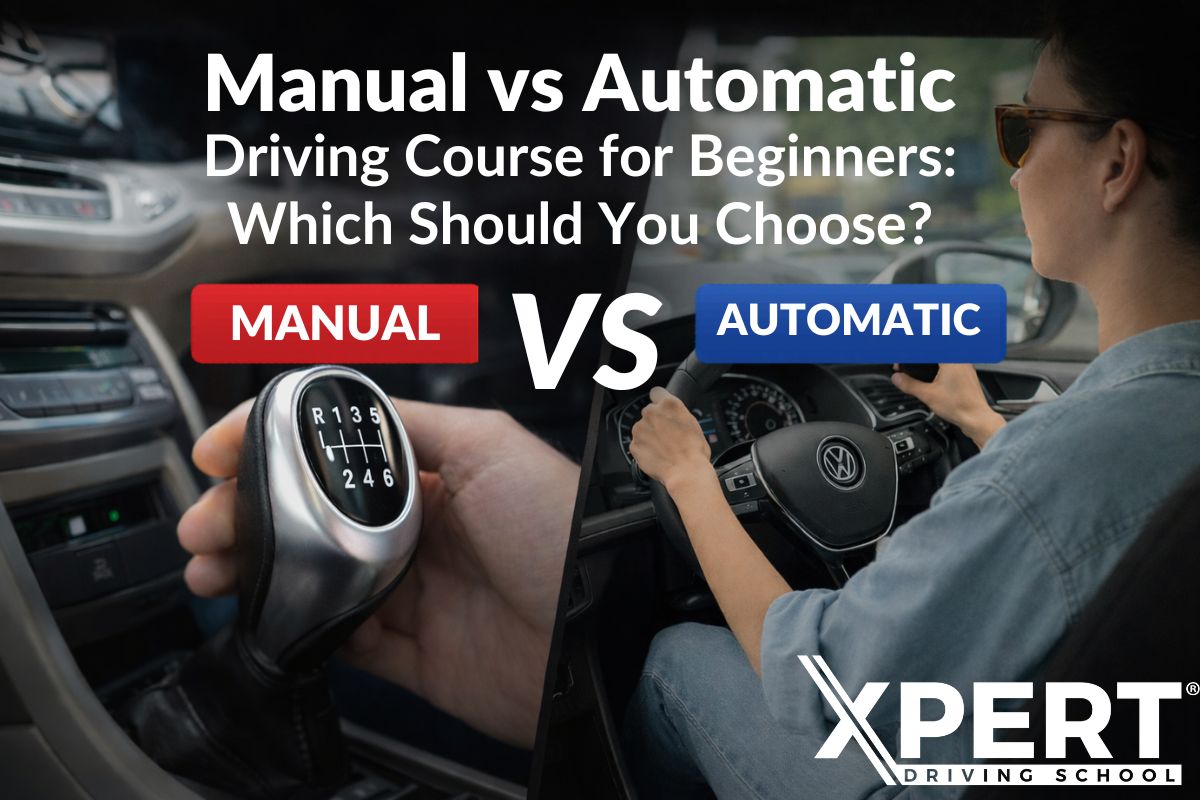
Choosing between manual and automatic driving courses depends on your goals. Manual offers total control and a license for both types, though it requires more coordination. Automatic is easier to learn, letting you focus on road awareness. Consider your budget, desired flexibility, and comfort level before enrolling.
Get Our ServiceCALL: +44 741 3740846
Do you want to hit the road with a proper driving license? Well, this is a great decision to avoid legal issues in the middle of your journeys. But when you enrol for a driving course for beginners in a driving school, one question can confuse you: “Manual or automatic?” You are not alone. Many people often get confused when it comes to choosing between these two options. The right choice shapes your confidence, cost, and long-term flexibility on the road.
Don’t worry! In this blog, we will dive deep, so you can clear your doubts and make an informed decision.
What is the Difference between Driving a Manual and an Automatic Car?
First, you need to know the differences between driving a manual & automatic car.
Gears & Clutch Control
A manual car requires you to change gears using a gear stick and a clutch pedal. You can decide when to shift up or down, giving you full control over changing traffic conditions around Sheffield.
An automatic car changes gears for you. There is no clutch pedal. You focus on steering, braking, and accelerating. That’s why automatic vehicles are always preferred for beginners.
Driving Experience & Focus
Driving a manual vehicle actually requires coordination & timing. Your left foot and right hand must work together. As a beginner, at first, it may feel challenging.
Automatic cars simplify the process. With fewer tasks, learners concentrate more on road awareness and planning.
Understanding a Manual Driving Course
What You will Learn:
A manual driving course covers clutch control, smooth gear transitions, starts, junction management, and handling Sheffield’s varied terrain.
The Licence You Gain:
Passing your test in a manual car allows you to drive both manual and automatic vehicles. That flexibility matters long term.
What is an Automatic Driving Course
What You will Learn:
Automatic lessons remove clutch control and manual gear changes. This makes the early stages easier for many learners. Confidence builds quickly. In this course, you can focus on positioning, mirrors, and hazard response instead.
The Licence You Gain:
Passing your test in an automatic car means you can only drive automatics. It is more restrictive. However, with more hybrid and electric cars, automatics are becoming increasingly common.
Many beginners also ask: What should I learn first in a driving course for beginners?
The foundation is simple. You will learn vehicle control, road rules, hazard awareness, and build confidence in real Sheffield driving conditions.
Key Factors to Consider When Choosing
Learning Difficulty:
Manual courses involve more coordination at the beginning. You may stall. That’s normal. Automatic lessons usually feel easier because there is less to manage physically.
Budget:
Manual lessons are often slightly cheaper per hour in Sheffield. Automatic lessons can cost a little more per hour. Yet many students progress faster and may need fewer sessions overall. It balances out.
Long-Term Driving Goals:
A manual licence offers full flexibility and broader employment opportunities where different vehicle types may be required. If your goal is stress-free city driving and convenience, an automatic may suit your lifestyle perfectly.
Test Pass Rates:
Automatic learners sometimes reach test readiness sooner because there are fewer technical skills to refine. According to our experienced instructors, success depends on preparation, practice, and expert guidance.
Which One Is Right for You?
There is no single correct answer. Your confidence level, coordination, budget, and plans all matter. If you want maximum flexibility, a manual is ideal. Prefer a smoother start? A weekly driving course with an automatic vehicle may suit you better. Trust your comfort level.
Honestly, manual and automatic courses can lead to confident, safe driving. Sheffield’s roads demand awareness and control, regardless of transmission type. With the right support, success is completely achievable.
Popular Posts
DVSA-Approved Driving Instructors: Everything You Need to Know
February 26, 2026
Looking for Driving Courses in Sheffield? How to Choose the Right One
February 20, 2026
Post A Comment