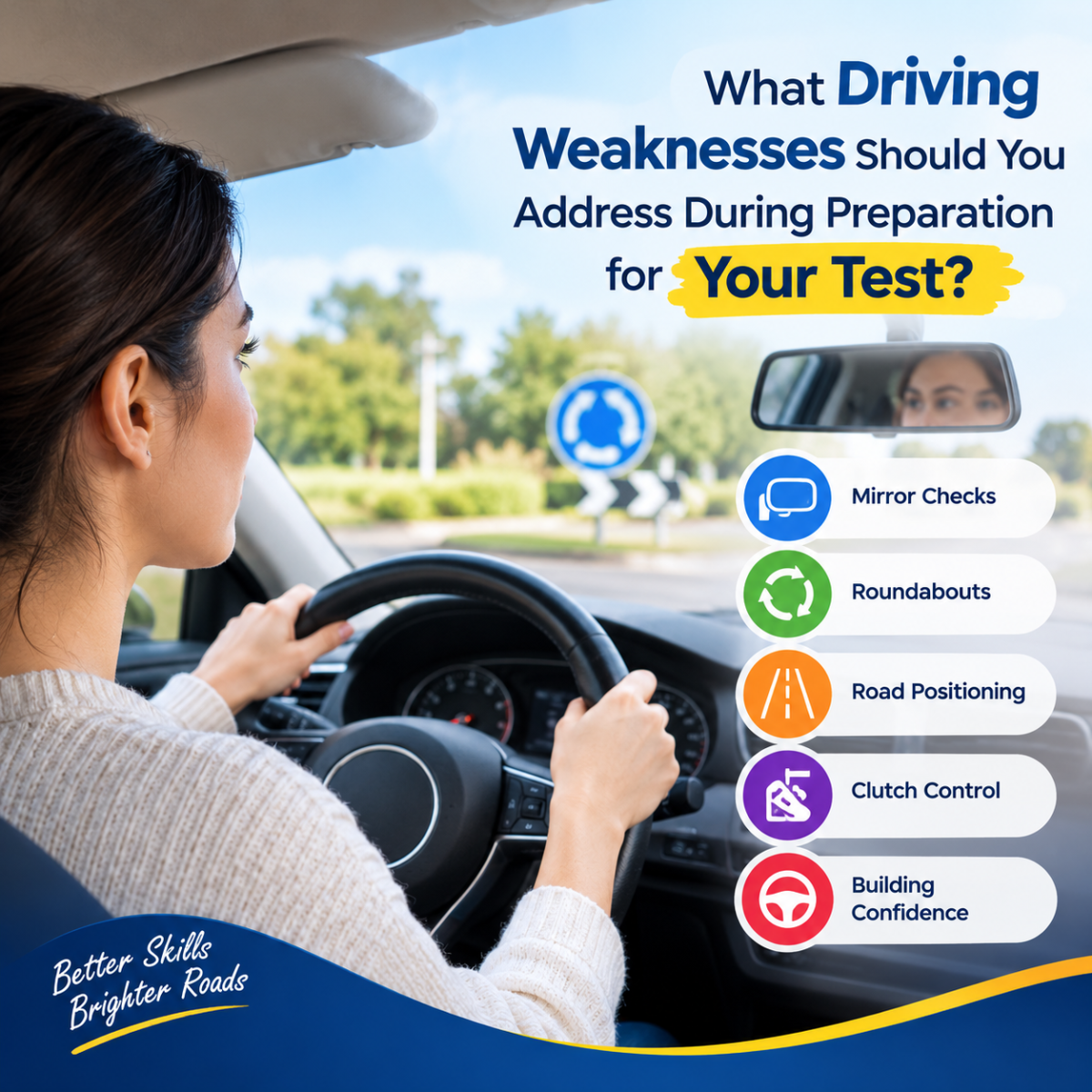
Summary: Driving test preparation isn’t just about learning the rules or getting comfortable behind the wheel. It’s about spotting the little habits that could cause trouble on test day, from missed mirror checks and hesitation at roundabouts to poor road positioning and clutch control. Working on these weaknesses early can make your driving feel more natural and confident. So, which areas deserve your attention first? Let’s discuss.
————————————————————————
You might be perfectly well on a familiar road, but then find yourself hesitating at a roundabout you’ve never used before. Or perhaps your instructors keep reminding you to look at the mirror. Frustrating, it is! Surely. But those little moments act as indicators to work on your weaknesses. Don’t worry! When you take preparation from a reliable driving school, they already work on your skills. But the idea of which skills you should improve before test day still matters a lot. Let’s discuss which weaknesses need to be rectified to call yourself a confident driver.
Which Common Driving Faults Should You Work On Before Test Day?
Are Your Mirror Checks Becoming a Habit
It’s surprisingly easy to forget your mirrors when you’re busy steering, watching traffic, and deciding where to go next. A lot of learners do the same thing and forget when they’re slowing down or going around a parked car. In this situation, mock driving test preparation shows you how you drive when nobody is prompting you, and whether your checks happen on their own. Always remember that you need to understand what’s happening around your car and respond accordingly as per the situation every time.
Do Junctions and Roundabouts Make You Hesitate
Quiet roads are fine for most people. It’s when lots of things land at once that it gets tricky. A busy roundabout in Sheffield, for instance, can leave you watching approaching traffic, checking road signs, and wondering whether you’ve chosen the right lane. If you do the exact thing, driving the same route again and again and hoping the nerves go away won’t really help. To resolve this, you need to work on your actual skill, judge gaps, and make decisions in critical times. If you’re unsure, don’t hesitate to communicate with your instructor; that’s all.
Can You Control the Car Without Overthinking
There’s a stage in learning where changing gears, finding the biting point, and braking smoothly seem to demand all your attention. That’s normal. The difficulty comes when these actions still distract you from the road. And if you stall occasionally, look at what happens just before it.
- Are you releasing the clutch too quickly?
- Or are you becoming nervous because another driver is behind you?
Practice these specific movements. And when an expert driving instructor is with you, you can manage those weaknesses as early as possible.
Are You Giving Yourself Enough Time to React
Speed and road position don’t get the attention they should. You might be keeping up with traffic but taking a bend too fast, or driving too near parked cars on a narrow street. Start paying attention to how the road changes around you. Could a child run out from behind a parked car? Is there a junction coming? Will an oncoming vehicle make the gap smaller? Spotting these things is what leads to safer choices and running the vehicle smoothly.
Getting better at driving takes time; a few slip-ups along the way are normal. Keep working on these things during your driving test preparation, which you find hardest. And in case you’re not sure what skills need more practice, get in touch and seek guidance before your test.
Popular Posts

November 20, 2026

November 06, 2026

Post A Comment