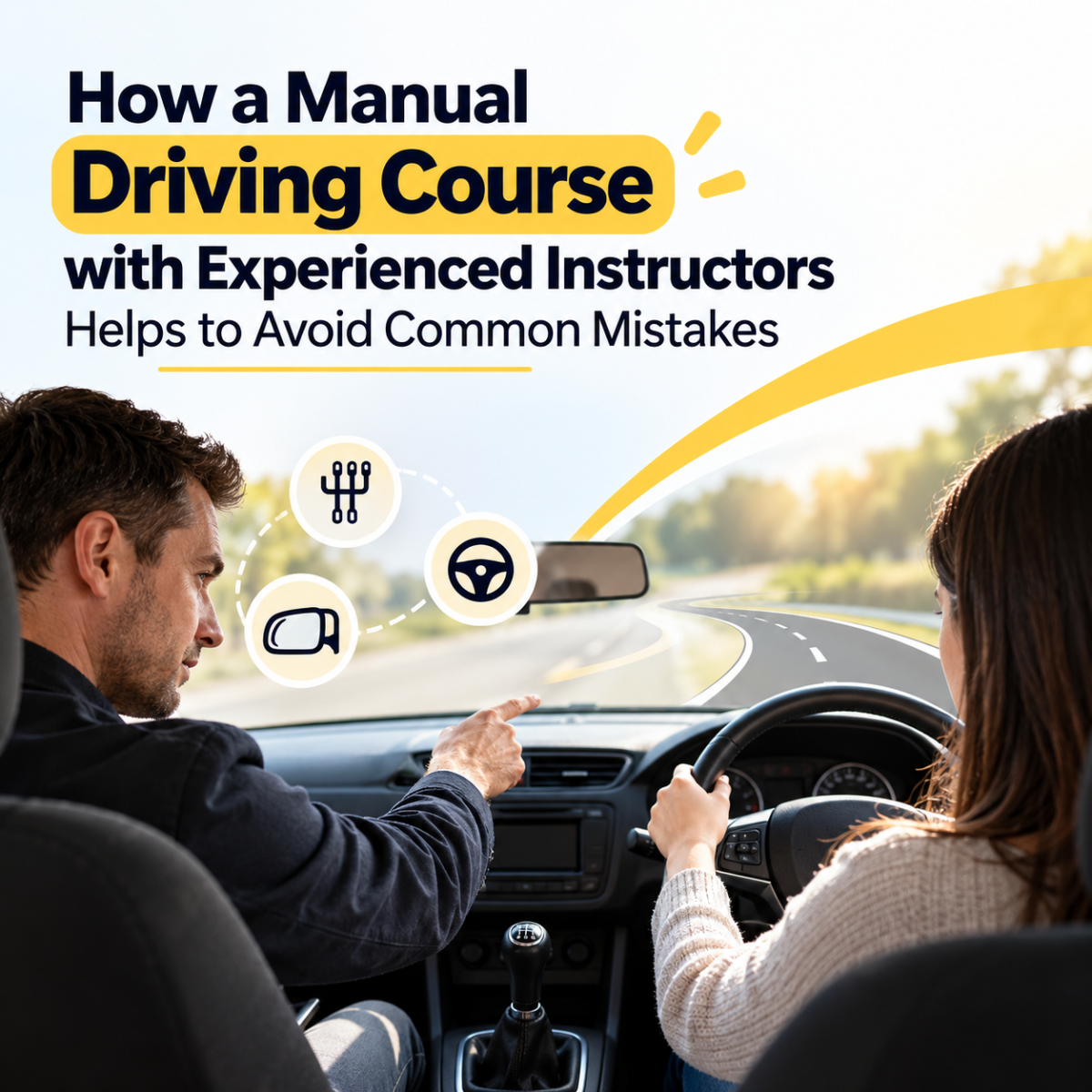
Summary: Learning to drive a manual car can involve common mistakes, including poor clutch control, incorrect gear changes, missed mirror checks, sudden braking, and hesitation at junctions. Experienced instructors can correct those habits through practical guidance. This results in improved steering, observation, speed control, clutch use, gear changes, and decision-making for safer and more confident driving.
Get Our ServiceCALL: +44 741 3740846
For beginners, learning to drive a manual car can feel exciting at first. But it comes with several challenges in managing the clutch, gears, steering, mirrors, pedals, and road conditions at the same time. Making mistakes during the early stages of learning is common, but most of these mistakes need to be corrected before they become habits with proper guidance and regular practice. This is where taking manual driving course with experienced instructors becomes crucial.
It can give beginners the opportunity to develop these skills safely while receiving useful feedback. In this blog, we will explore those common mistakes and how professional driving instructors help with them.
Common Mistakes Beginners Make While Learning Manual Driving
Releasing the Clutch Too Quickly
Releasing the clutch too quickly is one of the most common problems for new drivers. It can make the car jerk or stall, especially when you are moving away from a stop. Beginners can also press the accelerator too much because they are nervous about stalling.
Using the Wrong Gear
Choosing the wrong gear can make the car feel uncomfortable, affecting your control. Staying in a high gear at a low speed can make the engine struggle, while using a low gear at a higher speed can make the engine work harder than necessary. The knowledge of using the right gear is particularly useful when driving on hills, approaching junctions, or dealing with changing traffic conditions.
Forgetting Mirror Checks
Mirror checks are a natural part of driving because they help drivers plan their next move safely. New learners often concentrate so heavily on what is directly ahead and forget to check their mirrors. This reduces awareness of vehicles, cyclists, or pedestrians around them.
Breaking Suddenly
Sudden braking is another mistake that can happen when you react late to hazards. It can make your journey uncomfortable and give other road users less time to respond. Learning to look further ahead allows drivers to identify potential problems earlier.
Poor Steering Control
Due to having less knowledge about driving, beginners hold the steering wheel too tightly or make excessive steering movements. Regular practice with our expert driving instructors in Sheffield can improve steering accuracy, and you can become more comfortable with positioning the car and making controlled steering movements.
Hesitating at Junctions and Roundabouts
Junctions and roundabouts can be stressful for new drivers. They may hesitate for too long, enter when there is not enough space, or become unsure about which direction to take. They need to learn how to observe traffic, judge gaps, signal appropriately, and make decisions without unnecessary hesitation.
The Ways Experienced Instructors Provide Manual Driving Courses
Getting Clutch Control Right
Rather than expecting beginners to master everything immediately, experienced instructors break clutch control into simple steps. They can demonstrate how the clutch works, help learners identify the biting point, and provide feedback until moving off becomes smoother. Professionals from a reliable driving school in Sheffield can provide a structured environment where learners can practise these skills regularly while gradually building confidence.
Avoiding Poor Gear Changes
Instructors can teach you how to recognise when a gear change is needed by paying attention to speed, engine sound, road conditions, and upcoming hazards. You will gradually understand how the right gear supports smoother driving. Our intensive crash driving course can provide concentrated practice over a shorter period if you want to improve your confidence as a good driver quickly.
Improving Observation and Mirror Use
Driving experts do more than just point out your mistakes. They also explain why a particular observation is important, which helps you develop routines that become automatic over time. Habits like changing direction, changing speed, moving around parked vehicles, or responding to other road users support safer driving beyond the practical test.
Preventing Speed-Related Mistakes
Managing speed in real-world driving is not just about following the speed limit. You need to choose a safe speed based on visibility, traffic, weather, road layout, and hazards. If you are preparing for faster roads, a motorway driving course can help develop skills that help you maintain control at higher speeds.
Teaching Better Steering Techniques
Steering becomes easier when you understand correct hand positioning, road position, and how much is needed for different situations. Teaching better steering techniques is one of the qualities of a DVSA-approved driving instructor. These experts can correct poor habits early and provide practical exercises to improve control.
Avoiding Poor Junction Decisions
Junctions require observation, planning, speed control, and confident decision-making. Experienced instructors can teach learners to approach slowly enough to assess the situation and proceed safely. We offer different course formats and promote fair pricing, which gives you options based on your schedule and goals.
Learning manual driving takes practice, but you do not have to figure everything out alone. Our experienced driving instructors provide clear instruction, regular feedback, and the opportunity to practise different road situations to correct your mistakes and build safer driving habits. Contact us to discuss a course that suits your needs.
Popular Posts
What to Expect from a Driving Test Preparation Course in Sheffield
October 22, 2026

Driving Course for Beginners in Sheffield: What to Expect
October 14, 2026
Essential Skills Every Beginner Should Learn Through Driving Courses
October 07, 2026
Post A Comment