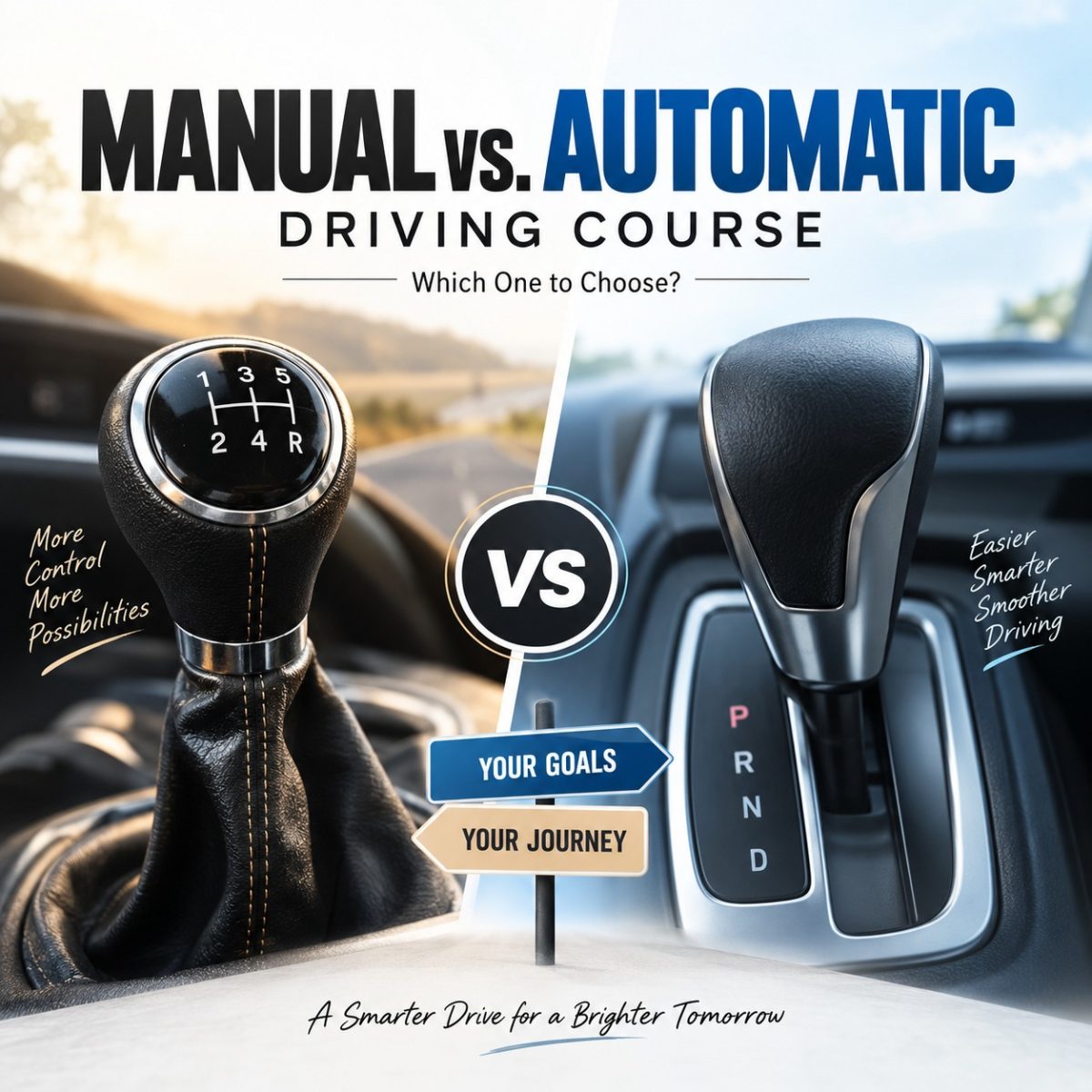
Summary: Choosing between a manual and automatic driving course depends on your learning experiences, driving goals, and future vehicle needs. Manual courses offer greater vehicle control, stronger driving skills, and broader driving opportunities, while automatic ones provide less fatigue, easier learning, and convenience in urban traffic. Understanding the differences between these two can help you make a suitable choice.
Get Our ServiceCALL: +44 741 3740846
Learning to drive is an interesting and crucial milestone in your life. Choosing between manual and automatic driving lessons is a big decision for every aspiring driver. Manual and automatic cars both come with unique perks and challenges. Manual cars offer availability and control, while automatic ones promise ease and comfort. When there is a debate on manual vs. automatic driving courses, it is challenging to decide which is right for you. In this blog, we will explore different aspects of these two courses and the key differences between manual and automatic driving courses to help you make an informed selection.
Understanding the Basics
Manual Cars
The motors in manual cars require the driver to operate a pedal, and you need to manually shift gears with the use of a gear stick. As a learner, you need to understand when to change gears, how to move away smoothly, and how to control the vehicle on hills, at junctions, and in slow-moving traffic. This coordination, assisted by our expert driving instructors, can take a significant amount of time to master. However, learning with manual cars helps you develop a detailed understanding of how the vehicle responds to different road conditions.
Automatic Cars
On the other hand, the motors of automatic cars robotically alternate gears without requiring driver intervention. The driving force required to control the accelerator and brake pedals makes the driving experience less complicated. For some first-time or nervous learners, removing manual gear changes can make the initial learning process feel more straightforward.
Aspects of a Manual Driving Course
Better Vehicle Control
The opportunity to develop direct control over gear selection and clutch operation is one of the main advantages of a manual driving course. Control over velocity and energy is useful for riding in challenging situations like rough terrain and steep inclines.
More Driving Opportunities
A manual licence generally provides broader vehicle choice in the UK. Learning to drive a manual car permits you to drive both automatic and manual cars. This flexibility is particularly useful when borrowing or renting a car at the destination.
Improved Driving Skills
Driving a car requires a higher level of concentration and coordination. It assists you in developing better focus and managing on the street. A reliable driving school can build confidence in vehicle handling and help you understand how the transmission affects driving.
Steeper Learning Curve
The additional controls can make manual lessons more demanding at the beginning. Especially for beginners, mastering gear changes and taking hold of manipulation may be tough. It takes time to develop clean driving skills. New learners may need extra practice to coordinate these activities.
More Effort Required
Driving a manual car in a heavy-site environment may be tiring, and it requires greater physical involvement. You need to operate the clutch and gear stick regularly, which may feel frustrating during longer journeys or busy urban driving.
Aspects of an Automatic Driving Course
Easier to Learn
An automatic course removes the need to operate a clutch and manually select gears. If you are researching everything about an automatic driving course, keep in mind that an automatic driving course simplifies vehicle operation but does not remove the need to learn road safety, observation, or responsible decision-making.
Less Fatigue
As a driver, you no longer need to manage a gear shift. This can make driving feel less physically demanding, especially during longer periods of stop-and-go traffic.
Better for Urban Driving
Automatic cars are perfect for city use, where starting and frequent stopping are common. It offers a smoother and more user-friendly experience. This can allow greater attention to traffic flow, signs, pedestrians, and other road users.
Growing Popularity
In the debate on manual vs. automatic driving courses, the increasing availability of automatic cars should be considered. It makes them a realistic option for current drivers.
Limited to Automatic Vehicles
The most important consideration is the licence restriction. If you learn to drive in an automatic car, your licence lets you drive only automatic cars. It means that the licence restricts your options.
Less Control
Automatic cars cannot provide the same level of control over speed and direction as manual ones. As a driver, you cannot manually select gears or operate a clutch.
Key Differences between Manual and Automatic Driving Courses
Drivability
A manual driving course gives you full control over gear shifts, making it great for steep inclines, highways, and tricky conditions. Automatics handle gear changes for you and allow you to focus more on the road than clutch coordination.
Cost of Lessons
Learning to drive a manual can be more affordable. If you are a budget-conscious learner, this is a strong plus. On the other hand, automatic driving lessons may come with a premium price tag due to the higher costs of automatic vehicles and instructor demand. We offer different course structures at fair pricing with intensive, semi-intensive, weekly, and mock-test options.
Maintenance
When it comes to maintenance of manual vs. automatic driving courses, it can be said that manual cars are simpler and cheaper to maintain, with fewer repair costs and occasional clutch replacements. Automatic cars have more complex systems, and if issues arise, it can result in higher repair costs.
Comfort and Convenience
Manual driving requires more physical effort and focus, especially in traffic. But many drivers enjoy the engagement and control manual cars provide. Automatic ones are all about convenience. It makes heavy traffic and long trips less stressful by offering a smooth and effortless experience that reduces driver fatigue.
Licencing Considerations
When you pass your driving test in a manual car, it qualifies you to drive both manual and automatic cars. But an automatic test limits your car entitlement to automatic vehicles.
Which One You Should Choose
Both automatic and manual driving courses have their own benefits and drawbacks. There is no single option that suits every learner. The right choice depends on your personal preferences, riding goals, and lifestyle. You should consider your needs carefully before you make a decision. This preference will form your riding experience for future years. Contact us to discuss your requirements and find a suitable way to begin your driving journey.
Popular Posts
Driving Test Preparation Tips for Nervous Learners
September 12, 2026
How a Learn to Drive Course in the UK Prepares You for Real-World Driving
September 11, 2026
How Long Does It Take to Learn to Drive as a Complete Beginner?
September 09, 2026
Automatic Driving Course: Everything You Need to Know
September 07, 2026
Post A Comment