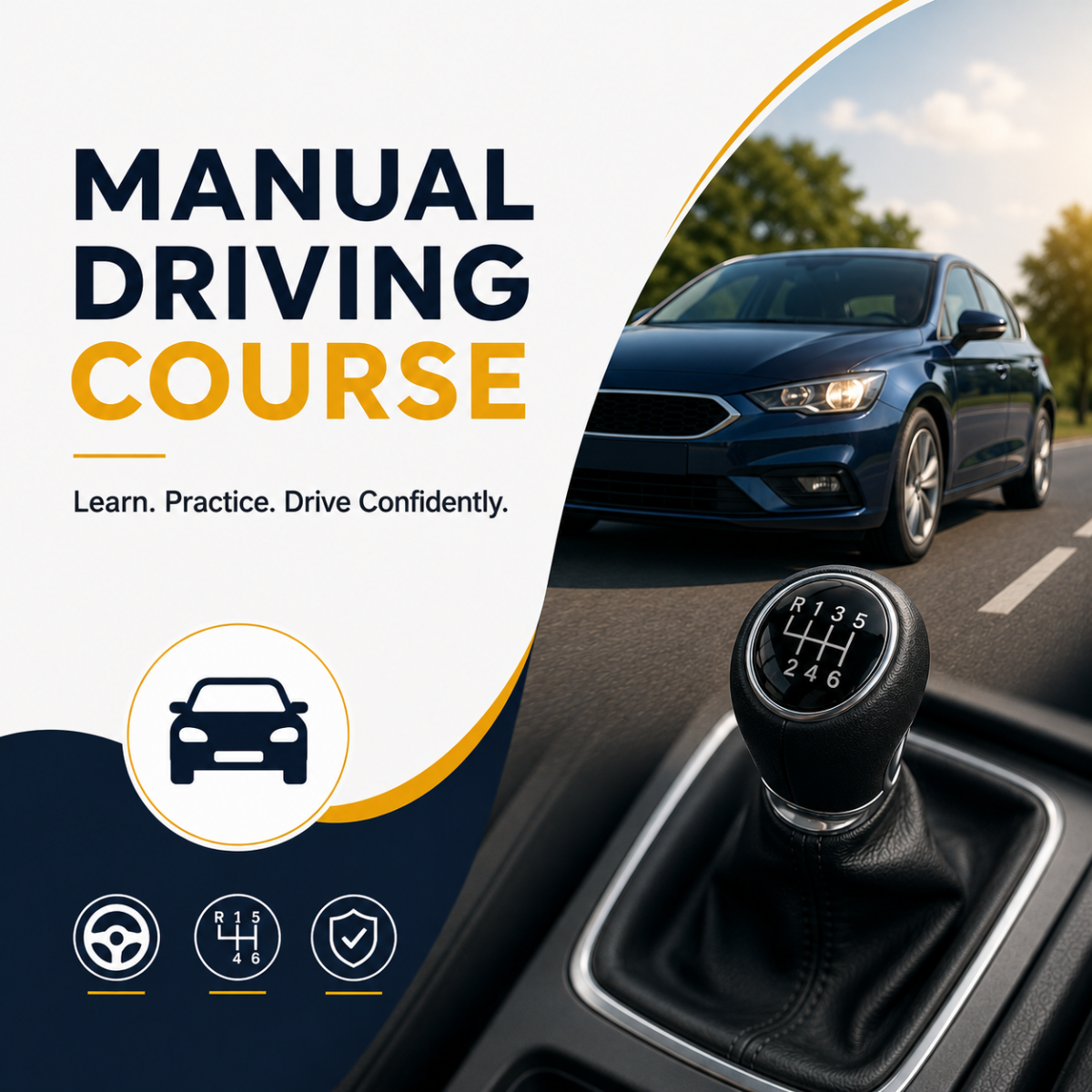
Summary: A manual driving course can teach learners how to operate a car with a clutch, gear stick, accelerator, and brakes safely and confidently. With proper guidance from qualified instructors, practical driving skills, defensive driving techniques, and comprehensive road knowledge will be developed. Manual driving also offers efficiency, greater control, and flexibility, and helps drivers build confidence and potentially prepare for the test sooner.
Get Our ServiceCALL: +44 741 3740846
Learning to drive a manual car can be an exciting step towards greater independence and freedom on the road. It is different from automatic vehicles as it requires a driver to coordinate the clutch, gear stick, accelerator, and brakes. A manual driving course may seem challenging at first, but the structured lessons can make the process easier and more enjoyable.
Choosing a manual course over an automatic gives you far more flexibility and experience. In many ways, it can make you a more complete driver for life. In this blog, we will explore everything you need to know as a beginner about this manual course.
What Is a Manual Driving Course
This is a structured programme that is designed to teach you how to operate a car with a manual transmission. Operating a manual car requires essential skills like gear changes, clutch control, moving off, steering, stopping, reversing, parking, and handling different road conditions. You can also learn important road rules, observation techniques, junction procedures, and hazard awareness. Choosing a reliable driving school with a well-planned course can help you develop safe driving habits and prepare confidently for your practical test.
How Long It Takes to Complete a Manual Driving Course
In general, learning to drive a manual car takes 10 to 15 hours to feel comfortable for new learners. This time can be reduced for new learners with some experience and also for automatic drivers. As every learner progresses differently, there is no fixed amount of time required to complete a manual driving course.
Lesson frequency can also affect progress. Learners who practise regularly may retain skills more effectively compared to those who take lessons with long gaps between sessions. Some beginners prefer standard weekly lessons, while others choose an intensive crash driving course to concentrate their training over a shorter period.
Key Reasons to Take a Manual Driving Course
Qualified Instructors
A manual driving lesson gives people access to a field of qualified driving instructors who are experienced in teaching first-time drivers. Professionals allow you to learn to drive while you can get comfortable with the basics. They can identify mistakes early, demonstrate correct techniques, and provide constructive feedback throughout each lesson. This personalised approach can make learning more efficient and less stressful.
Gain Confidence
Confidence develops through preparation and repeated practice. The initial cost of a manual driving lesson is high, but getting assistance from a qualified instructor is an unparalleled investment. It not only gives you confidence to get on the road and pass your test sooner but also equips you with a comprehensive understanding of what manual driving involves. As you become more comfortable with the manual car, you can focus more on observation, planning, and anticipating potential hazards. It transforms individual driving skills into a more natural and confident driving routine.
Pass Your Test Sooner
Taking organised lessons can help learners prepare for their practical driving test more efficiently. Failing your driving test the first time often comes down to technicalities and simple mistakes that can quickly add up. A professional mock driving test course will equip you with the best tips to pass the test and avoid these common pitfalls. This approach can help identify areas that need improvement before the actual examination and reduce uncertainty about what to expect.
Defensive Driving Techniques
Safe driving involves much more than controlling a vehicle. You need to understand how to anticipate the actions of other road users and respond appropriately to changing conditions. Experts use some defensive driving techniques, with which you can have a much higher chance of avoiding an accident on the road. These habits can contribute to safer decision-making long after the driving test has been completed.
Comprehensive Knowledge
This is placed at the top of the reasons to take a manual driving course. Qualified instructors can ultimately teach you how to master operating a manual car. They will thoroughly guide you through everything from perfecting the gear shift to starting, stopping, parking, and how to use the pedals and clutch. This comprehensive approach prepares you not only to pass an examination but also to handle real-world driving situations more responsibly.
Advantages of Learning to Drive a Manual Car
Greater Control
Manual driving offers more control over the vehicle, and you can expertly respond to changing road conditions. This is particularly beneficial in environments that are hilly or mountainous. Being able to choose an appropriate gear can be useful when accelerating, slowing down, or travelling on inclines. With practice, these actions become smoother and more instinctive.
Efficiency
Efficiency is one of the key qualities of a good manual driving test practice course. It can be said that manual is more efficient than automatic, especially in fuel consumption. In addition, this course is typically less expensive to purchase and maintain. Paying attention to speed, engine response, and road conditions, and developing awareness can support smoother and more controlled driving.
Flexibility
Learning to drive a manual car is more of a task compared to an automatic vehicle. It can open up many roads internationally. With a manual car driving licence, you can have access to a greater range of cars when you are not limited to just automatic cars. This can be useful when borrowing a family member’s car, choosing a work vehicle, or considering different options when purchasing a car.
How to Choose the Right Manual Driving Course
Not every driving course provides the same learning experience, so it is worth considering what is included before booking. Rather than focusing solely on familiar routes, a useful course should also provide opportunities to practise different road environments. You need to consider instructor qualifications, vehicle condition, lesson structure, learner feedback, and fair pricing. These factors can make practice sessions more purposeful.
Learning to drive in a manual car gives you freedom, confidence, and lifelong flexibility. By following the instructions of our DVSA-approved instructors, you will finish with a complete licence, stronger driving habits, and a deeper understanding of how your car works. Also, you will learn safely, progress at your own pace, and build the skills to drive confidently anywhere. Contact us to discuss your options and take the next step towards becoming a confident manual driver.
Popular Posts
Manual vs. Automatic Driving Course: Which One to Choose
September 19, 2026
Driving Test Preparation Tips for Nervous Learners
September 12, 2026
How a Learn to Drive Course in the UK Prepares You for Real-World Driving
September 11, 2026
How Long Does It Take to Learn to Drive as a Complete Beginner?
September 09, 2026
Post A Comment